
What's Growing On At The Garden - July 2026

Our first 100-degree days have arrived, marking the beginning of a true—and very welcome—Texas summer. The garden has completed its seasonal shift into summer, transforming into a jungle of large, green-leaved okra, vining sweet potatoes covering entire beds and pathways, and the cheerful buzz of our newest garden additions: honey bees.
Earlier this month, we received two beehives from our partners at ArkEarth, bringing more than 22,000 busy pollinators to the garden. Each morning, before the sun rises over the sycamore and oak trees, our new helpers can be seen buzzing among the melon, salvia, pea, and okra flowers, collecting nectar and pollen.
These bees are working hard to pollinate our garden and build food reserves that will sustain them through the rest of the summer and the upcoming winter. Their work will help us produce more fruits and vegetables for donation to our two local food pantries.
Later this year, ArkEarth will harvest a small amount of the bees’ honey reserves for the garden and church to donate and sell. The proceeds will help us continue investing in the health and well-being of both the bees and the garden.
You can read the Fort Worth Report’s story about our bees HERE.
Composting for a More Regenerative Garden

A big shout-out to Ridglea Country Club and its kitchen staff for supplying us with weekly food scraps for our compost program. Their generous contributions have significantly increased the food scraps we receive from our longtime partners at the Culinary School of Fort Worth.
With these additional materials, the garden will now be able to produce enough homemade “black gold”—nutrient-rich compost—to supply our entire growing operation. We are one step closer to becoming a truly self-sufficient and regenerative garden.
Come See Us at the Funkytown Mindful Market
Please join us at the Funkytown Mindful Market on September 5, where we will have garden-grown honey and hot sauces available for sale.
The market takes place on the first Saturday of every month, and we plan to become a regular vendor. It is a wonderful opportunity to engage with the broader community, share our mission, and help grow the local food movement.
Produce Highlight: Hot Peppers
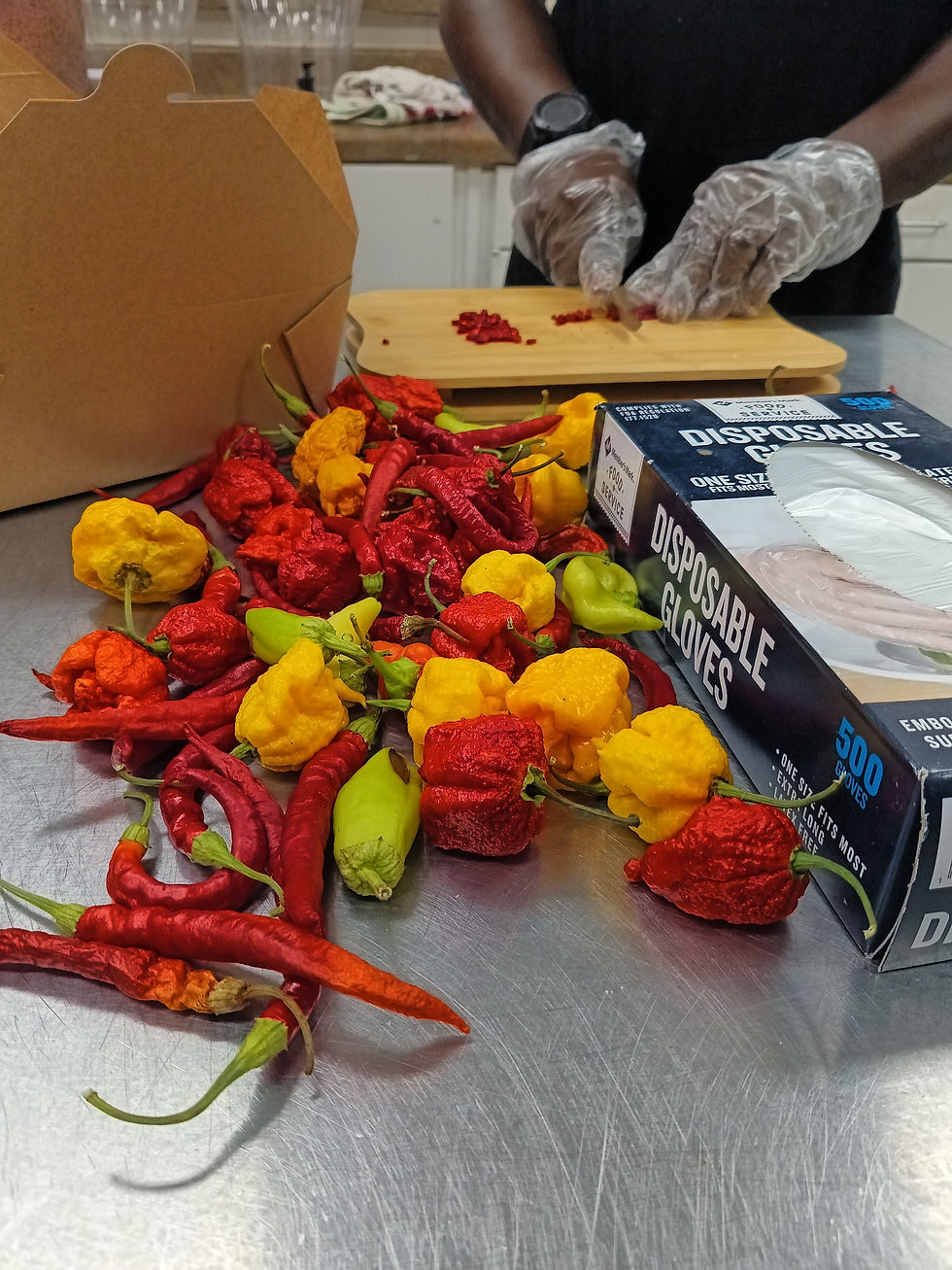
The celebrity vegetable of the month goes to the peppers—the hot peppers—the really, really hot peppers!
We’re talking about Big Mamas, 7 Pots, and Scotch Bonnets. These incredibly spicy fruits deserve the spotlight because they love the heat. While other spring vegetables, including our sweet peppers, take a break until cooler fall temperatures arrive, these peppers say, “Hold my hot sauce,” and begin pumping out their small but mighty fruits.
That is exactly why we grow them. Hot peppers are wonderfully hardy plants that can continue producing deep into the Texas summer.
For the best results, start seeds indoors in mid- to late January. Keep them well-watered under plenty of artificial light until late March or mid-April. After the last threat of frost has passed and soil temperatures begin to warm, transplant your peppers into well-draining, compost-rich soil.
Keep the plants well-watered until they are established. You should begin to see fruit ripening by late June, just as temperatures really begin to climb.
Want to make your peppers even hotter? Once fruit production begins, slightly reduce watering to stress the plant. This can intensify the heat of the peppers.
Education & Events
A youth group from Des Moines, Iowa, visited the garden while staying at the church with the organization Be The Neighbor. The campers toured the garden, compost area, and visited our partner food pantry, Las Vegas Trail Rise. They learned about sustainable food production and food security in Fort Worth.
Ridglea also hosted another food-preserving workshop with Made Greene this month. Educators from schools across the DFW area came to the garden to learn how to transform garden produce into completely shelf-stable pantry items for their communities.
July was also filled with both regular and new volunteers. Stonegate visited the garden for the third time this summer to help with seasonal garden maintenance. We also had the opportunity to escape the heat and head into the kitchen, where we experimented with turning chile peppers into shelf-stable powders and hot sauces for donation to local food pantries.
How to Get Involved
Volunteers are the lifeblood of the Ridglea Giving Garden. We couldn’t do this work without you—and we certainly wouldn’t have nearly as much fun gardening without all of you!
If you or your group would like to volunteer, CLICK HERE to learn more.
If you would like to send a gift to support our work, please CLICK HERE.


Comments